
A budget is a plan, not a punishment
A budget is simply a plan for your money: what comes in, what goes out, and what you want left over. The best method is not the cleverest one. It is the one you will still be using in three months.
All three methods below begin the same way: take-home pay minus recurring commitments. That tells you what is genuinely available before the month starts.
We will use one example throughout: Sam takes home $3,600 a month.
Method 1: 50/30/20
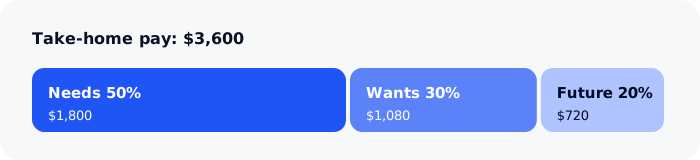
Split take-home pay into three buckets:
| Bucket | Share | Sam's amount | Includes |
|---|---|---|---|
| Needs | 50% | $1,800 | Housing, utilities, groceries, insurance, transport, minimum repayments |
| Wants | 30% | $1,080 | Eating out, entertainment, hobbies, most subscriptions |
| Future | 20% | $720 | Savings, extra debt repayments |
Good for: people who want a simple rule of thumb and little admin. Watch out: in high-cost areas, needs can exceed 50% on their own. Treat the percentages as a starting point. If needs are 60%, the useful question becomes "how do I protect the future share?", not "I have failed".